Showing posts with label Nicholas Barth. Show all posts

Monday, November 22, 2010

Top Ten Turkey Day Pairings

The Thanksgiving table at our house is a mess. Besides the fact that my uncle will be drunk when he shows up and my aunt feels the need to tell me in great detail about her recent trip to the craft store, our Thanksgiving feast is chock-full of random, borderline non-food ingredients. This year will be with my father's side of the family, and he has 11 siblings, each of which has spawned. This year it will be a small gathering with only 68, which means a plethora of taste preferences, cooking skills (or lack thereof), and most challenging, personalities. Fortunately, wine's got us covered on all points.

This may be completely foreign to you, and if it is, count your blessings. Because we're so big, we have to run our Thanksgiving like a giant potluck. Whoever hosts, God bless them, makes the turkey. Then each guest is assigned a side: potatoes, stuffing, yams, and of course the questionable ribbed cranberry "sauce" and Under the Sea "salad" I alluded to in last week's post.

If you wonder why I got into this line of work, it's because my family drove me to drinking. In this family, holiday cheer comes in 750ml bottles. I like to have a glass the night before Thanksgiving and drink right on through to the New Year. So those of you who have complicated dinner arrangements, and I'm not just talking about food, raise your glass with me and toast a list of my favorite Thanksgiving wines.


1. Dr. Loosen Bros. 'Dr. L' - Riesling - Mosel, Germany - $12
When you have a lot of flavors and textures on the table it's best to throw a little sugar at it. This light, refreshing Riesling won't overpower the turkey, and will compliment sugar in sides like the yams and cranberries. It also has a racy acidity to hydrate the palate after each salty, gravy-laden bite. Plus, that nice touch of sweetness makes it easy to drink, so your uncle who "hates" wine will be able to knock back a few without complaining. For your trendy, ratings-whore cousin, the '08 scored a 90 points in Wine Spectator last year, solidifying its place on Spectator's Top 100 list. That'll shut him up.


2. The Crossings 'Unoaked' - Chardonnay - Marlborough, New Zealand - $16
This clean, refreshing white is a great compliment to the many elements on the table. It has the body to stand up to heavier dishes, without getting lost. Plus, it's nothing like a typical Californian Chardonnay, so you can squash that ABC (Anything But Chardonnay) mentality. This winemaker avoided adulteration to create a perfect Turkey Day wine.


3. Trimbach - Gewurztraminer - Alsace, France - $23
Alsatian Gewurztraminer could be one of the most food-friendly wines in the world. Many people believe all Gewurz is sweet, but in Alsace many are produced dry, Trimbach being one. It has a little weight and a great acidity. In addition, it's spicy. So if you have cinnamon in your yams or cloves in your cranberry sauce, this will enhance them, drawing the spices out of the dish.

4. Willamette Valley Vineyards 'Whole Cluster Fermented' - Pinot Noir - Willamette Valley, Oregon - $19
This wine works on three levels. One, it's delicious. Two, Pinot Noir is incredibly food-friendly - light body and tannin make it a go-to pairing, Thanksgiving dinner included. And three, Pinot is popular. In the post-Sideways world, people love Pinot Noir (even if they've never had it) simply because it was the feature grape of the film. Plus it's approachable and easy to drink, appeasing even non-red drinkers...so I guess there's number four for you.


5. Georges Duboeuf Beaujolais Nouveau - Burgundy, France - $12
You've already heard me rant about Nouveau. While it is plonk, and basically a giant marketing campaign, it does pair well with Thanksgiving dinner. In fact, the 2010 Duboeuf Nouveau wasn't terrible. It's soft and juicy, with a decent acidity. The wine's almost sweet-like characteristics make it a great partner to the varying sugar levels on the table. It's also inexpensive and tastes like bubblegum, so it'll be a huge hit with non-wine drinkers. A great quaffer to get you through the meal.


6. Alexander Valley Vineyards Merlot - Alexander Valley - $20
This one's our dirty little secret. While it's almost hip to like Merlot again, some people never got the memo that most of the bottles coming out of California for the last two decades were overproduced fruit bombs. They're still keen on it from the late 80's. Some trends never die...unfortunately. In all seriousness though, it's fine with me. Drink what you like, I say. So show up with this one and you'll look like a hero among the never-updated-their-taste Merlot die-hards. But the secret is this puppy drinks more like a Cab than a Merlot. So while you play the hero, you'll also be able to enjoy it yourself, without any plummy, overproduced madness. Plus, it's got a high ABV, and it never hurts to have a little extra "sauce" for the family meal.


7. Rockbare Shiraz - McLaren Vale, Australia - $18
I love this spicy little devil. Shiraz from Australia is very popular, but much of it is high in alcohol, high in fruit flavors, and low in character or regional identity. This wine found a perfect balance. It still has fruit and weight, but shows depth and complexity. The spice in the glass will, like the Gewurztraminer, draw out any spice on the table. If you're getting wacky and thinking about going Cajun with your turkey (a la the Cru Wine Online recipe), reach for a bottle of Rockbare. You won't be disappointed.


8. Duckhorn 'Decoy' Zinfandel - Napa, California - $22
BEWARE. If your family is anything like mine, you may have to explain that Zinfandel is red. Only when adulterated and artificially sweetened is it the boxed Kool-aid "wine" popular in the 80's & 90's. Wait, that was more of a burn for Kool-aid than White Zin (Oh Yeaahh!). All joking aside, 2008 is the first vintage of the Decoy Zin Duckhorn has ever produced, and they are having a tough time selling it. Hard to believe when their test market batch was around 9000 cases. A lot of stores are discounting this product, so you can usually get it for a steal. Low sales be damned, the wine is great. It's jammy, not tannic, which is what you need for Thanksgiving dinner. A real crowd pleaser.


9. Novelty Hill Syrah - Columbia Valley, Washington - $22
Que Shiraz, Syrah. When you roast a turkey flavors are concentrated on the outside of the bird, creating a little more texture and weight. This hearty Syrah will be do well with the bird and appease the "Big Red" drinkers in the family. It has a slightly vegetal thing on the palate, so rubbing elbows with the green beans and other veggies on the table will also be right up its alley. Novelty Hill does great work. If you haven't already, pick up a bottle for yourself and don't share. Wait...the holiday's are about giving...nope, just too delicious.


10. Roederer Estate 'Brut' - Sparkling - Anderson Valley, California - $23
Last but not least is the Roederer Estate Brut bubbly. Roederer Estate is owned by the infamous Louis Roederer, the man who produces the ultra-popular Cristal. This pairing could be regarded as one of the most generic of those on this list because it lacks creativity. But hey, if it works, it works. Its crisp acidity, lower alcohol, and bright bubbles make it a good match for the various, sometimes dubious components on the table. The texture of bubbles can compliment just about any dish under the sun. If you're stuck and don't know where to turn, reach for this delicious bubbly. It's made using the traditional method, the same process used in Champagne, France. This method imparts more flavor, balance, and depth into the wine. It is dry though, so beware criticism from your old-school family members who's quintessential "champagne" is a bottle of Andre Spumante. And don't let them put cola in it. Just buy a backup box of Franzia if that's the case.


Well, there you have it, the top ten turkey day pairings. If you read this and think I'm crazy because you enjoy spending the holidays with your family, I have just one thing to say...Can I get directions to your house this Thursday? In all seriousness I love my family as much as the next guy, but too much of a good thing...you know. So this year I was trying to figure out a way to imply they all need to leave after dinner, without being rude. So I decided I'm going to slip into my nightwear after we eat to send a subtle hint. Boy are they going to be surprised when they find out I sleep in the nude.

These are 10 value-packed, accessible options for your Thanksgiving day meal. I hope you get the chance to try one. I myself am going fully loaded to Thanksgiving. I'm bringing them all. For more information about me, more incredible value picks and delicious food and wine pairings, check us out online at Cru Wine Online. We post Wine and Recipe pairings for our users each day, pairing our chefs' recipes with delicious wines, and bringing them to you in an entertaining video short, complete with a brief explanation of the wine, the dish, and the pairing. Subscribe today and receive a FREE wine aerator, a $14.95 value. Life's too short not to enjoy every sip, so drink it up. Entertain your senses with Cru Wine Online's monthly membership. At only $7.99/month you can't afford not to!

As always if there's something that you think should have made this top ten list, feel free to contact me via email, on Facebook, or simply leave a comment here on the blog. Thanks again for reading.

Salut,
Nicholas Barth
Wine Director
Certified Sommelier
Cru Wine Online

Monday, September 13, 2010

Top Ten Classic Food & Wine Pairings

I always say, "Fear no food and wine pairing!" While there is no such thing as a wrong pairing, certainly some work better than others. Pairing food and wine has come so far from the old school theory of red wine with red meat and white wine with white meat. With the introduction of fusion cooking and the growing wine market, there are so many options it can be overwhelming. This list of food and wine pairings has stood the test of time and always come out on top. Here are the top ten classic food and wine pairings:

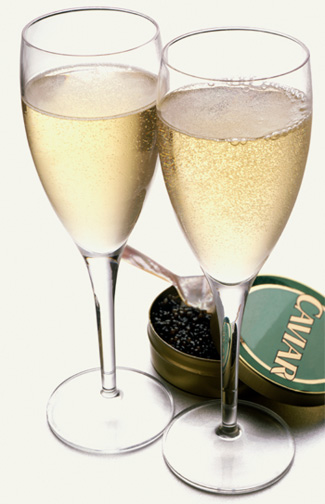
1. Champagne & Caviar
Champagne can pair with almost any dish. It's arguably the most food friendly wine under the sun. The wine's low alcohol content, refreshing acidity, and bubbly texture make it a great match for almost any food. But Champagne, specifically Blanc de Blancs and Caviar is a pairing fit for a king, literally. Blanc de Blancs Champagne comes from the Champagne region of France, and is made from 100% Chardonnay, one of the three principal varieties in the region.

Caviar is just a fancy name for the salted eggs of the Sturgeon, a fish commonly found in Russia. The marriage is said to have been discovered as a result of religious practices. In ancient Russia eating meat was forbidden 200 days a year. They supplemented their diet with various types of fish; insert caviar. It's likely that the Czars of Russia were the first to discover this classic pairing since only the wealthy and prestigious imported and drank Champagne. From the first time light, lively Champagne refreshed and cleansed the palate after each bite of salty caviar, this pairing has been a classic. While many use it to ring in the new year, the match makes a great pairing any time of year.

2. Sancerre & Goat Cheese
Sancerre and goat cheese is as much a regional pairing as it is a classic pairing. There is an expression used when pairing, "If it grows together, it goes together." That applies here. Sancerre is a region in France known for producing flinty, crisp, refreshing white wines from the Sauvignon Blanc grape. While the region also makes reds from Pinot Noir, this pairing is about the whites.

In Sancerre, wherever they don't grow grapes, they raise goats. Hence the reason "grows together, goes together" fits here. The salty, chalky goat cheese is enhanced without being overpowered by the refreshing, medium-bodied Sauvignon Blanc from the region. To say this is a classic may be an understatement. This pairing has encouraged many wine novices to become connoisseurs.

3. Bordeaux & Roast Spring Lamb
Staying in France, this next classic is a carnivore's dream. The origin of the expression, "red wine with red meat" exists if not for one reason: tannins. Tannins are found in red wine. They are that mouth drying sensation that can leave you begging for a glass of water to hydrate the palate. Proteins like red meat and Lamb love a little tannin to help cut through them. This is why a red wine producing region like Bordeaux in France makes such a great pairing for meat. Bordeaux is well known for its full-bodied red wines made from a blend of Cabernet Sauvignon, Merlot, Cabernet Franc, Petit Verdot, and Malbec. The reds from the region, when done well, are complex mixes of dark fruit and earth notes.

Beyond world-class red wines, the region also raises lamb, making this another "grows together, goes together" pairing. Bordeaux sweet and tender salt marsh lamb roasted with herbs is a perfect pairing for a red from the Medoc (left bank of Bordeaux), especially from sub-regions like Pauillac and St. Julien. These wines, especially when aged, mellow out creating a symphony of flavors that compliment and enhance the dish. This meal is definitely the time to bring out the blue chip (expensive & high-quality) bottle of Bordeaux you have been saving.

4. Sauternes & Foie Gras
With this classic, rich meets even richer. Sauternes is a region in France that produces stunningly sweet white wines from the Semillion and Sauvignon Blanc grapes. Sauternes is sweet because the grapes used to produce it are effected by a mold called Botrytis Cinerea, aka the Noble Rot. Botrytis doesn't occur everywhere in the world. It requires an environment where moisture can meet the sun at the perfect time to create just the right mold. The resulting wine is usually expensive, but more importantly sweet and rich, displaying flavors and aromas of peaches, apricots, and honey.

Foie Gras is a delicacy made from duck or goose liver. The birds are force-fed to fatten the liver to the size of one pound to a pound and a half. The enlarged liver is then cooked in its own fat and oils, butter, and a mix of spices to create a rich, succulent dish. While it may sound unappetizing and cruel, the pairing is remarkable. The rich, sweet Sauternes cuts through the rich Foie Gras creating a perfect balance of flavor and texture.

5. Vintage Port & Stilton
With this classic, sweet meets stinky. Stilton cheese is a traditional English blue, or bleu, cheese made from cow's milk. During production, the cheesemaker pierces the wheel with long stainless steel needles to allow the mold to attack the inside. The result is a rich and creamy, not dry and crumbly, cheese that displays aromas and flavors of old leather, dark chocolate and spice. Blue cheese usually inspires a love or hate relationship with most people. But paired with a rich, sweet dessert wine like Vintage Port, all bets are off.

The term port refers to a fortified wine from Portugal. Fortified is just a fancy name for wines that have had a spirit, usually brandy, added to them. With fortified wines the end result is often, but not always, sweet, and this is the case for port. The name port carries a specific meaning and restrictions. Although the name should not be used for fortified wines outside of the region, it often is.

The term vintage port simply means that all of the grapes are from one year's grape harvest. Vintage is usually declared 3 times a decade. The vintage ports of Portugal are rare, accounting for less than 1% of the country's dessert wine output. They are sweet with high alcohol content (which it should be seeing as they add liquor to the juice) and display flavors and aromas of dried fruit, vanilla, and spice. The full-bodied, sweet vintage ports cut through the stinky blue cheese creating a sweet and savory pairing that will shock even the most extreme blue haters.

6. Chablis & Oysters
With this classic, salty meets refreshing. Chablis is a region in Burgundy, France that produces clean, refreshing whites from the Chardonnay grape. The wines produced aren't the buttered popcorn style you may know Chardonnay to be. Instead the Chards from the region are elegant and refined, displaying a wonderful, racy acidity with flavors and aromas of green apple and spice.

This pairing works so well because the salty oysters are tamed by the refreshing acidity in the crisp, white Chablis. Oysters also have a weightier texture, and full-bodied Chablis has the strength to hold up to it without masking the dish. A match made in heaven.

7. California Chardonnay & Lobster
With this pairing, the same grape is used to make the wine, but the style couldn't be any different than that of Chablis. In Chablis, as I mentioned, the style is crisp and refreshing with tree fruit flavors and aromas. California vintners, on the other hand, tend to produce a style that is big and rich with flavors and aromas of butter and tropical fruit. The lush California style Chards make a perfect pairing for a dish like lobster.

Lobster is usually served with butter, a perfect compliment to the buttery style of Chardonnay produced in California. Lobster is also a weightier seafood. It requires a wine that can stand up to that weight while complimenting the flavors. A California Chardonnay does both beautifully. This match isn't as aged as something like caviar and Champagne, but a classic none the less.

8. Muscadet sur Lie & Mussels
This classic pairing is yeast meets west. Muscadet sur Lie is a sub-region in the western part of the Loire in France. The area is close to the sea making this another great "grows together, goes together" pairing. Muscadet sur Lie is a white wine made from the Melon de Bourgogne grape. The term "sur Lie" signifies that the wine was aged with its sediment, or dead yeast cells. The sediment imparts texture, flavor, and aroma. The end result is a wine that is light-bodied, dry, and acidic, with flavors and aromas of yeast and tree fruit.

Muscadet has the characteristics to pair well with a variety of seafood, specifically shellfish, dishes. The reason this particular pairing works so well is because of Muscadet's racy acidity. I sound like a broken record, but salt needs acidity to ready the palate for the next bite. Couple that with the lightweight characteristics of the Muscadet, and you have yourself a classic French pairing that will allow both elements to shine.

9. Cru Beaujolais & Charcuterie
Before you jump to Beaujolais conclusions, let me explain. Beaujolais is a region in France that produces red wines from a grape named Gamay. The Beaujolais region is inside of the greater Burgundy region. Some years, Beaujolais makes more wine than the rest of Burgundy, with nearly half of the wine being sold as Beaujolas Nouveau. You may have seen Beaujolais Nouveau at your local retailer. Lately it has arrived in plastic bottles, very sexy. In short Beaujolais Nouveau is a mass marketing campaign disguised as a celebration of the new harvest. Each year on the third Thursday in November, Beaujolais Nouveau is shipped around the world to be consumed by the masses in “celebration.” I'd almost rather celebrate with ether and koolaid.

Nouveau is consumed very young. The grapes are picked, fermented and aged all within 6-8 weeks. The result is a purply-pink, very light wine that usually tastes like bubble gum. The wines generally lack structure and need to be consumed before the first of the year.

But Beaujolais is so much more than Nouveau. Even the regular wines from the region or the Village show more depth and character than the Nouveau. The real star from the region is Cru Beaujolais.
Within the greater Beaujolais region, there are 10 sub-regions that have superior conditions for growing grapes. These sub-regions are called Crus, which means "growth" in French. While Cru Beaujolas is made from the same grape as Nouveau, gamay, the styles couldn't be more dissimilar. Cru Beaujolais has more structure, depth, and character, and makes a great partner for food. Enter charcuterie.

Charcuterie is a glamorous name for cured meats. A plate of charcuterie usually consist of a variety of pork products including but not limited to: bacon, ham, sausage, galantines, pâtés and/or confit. The plate is usually salty and weighty, a common theme with classic pairings. Cru Beaujolais, as I mentioned, has a remarkable acidity and a touch of tannin to hold up to the plate. This classic is usually a shocker for people who haven't tried Cru Beaujolais.

10. Fino Sherry & Olives
With this classic pairing, salt meets...well...more salt. When pairing food and wine you basically have two options: compliment or contrast. This last pairing is definitely an example of complimenting. Fino Sherry is a fortified wine made from white grapes that grow in the Jerez region of Spain. What separates this fortified wine from the vintage port above is timing. With Port wine the spirit is added in the middle of fermentation to kill the yeast, what is left is sugar which results in a sweet wine. With Fino Sherry the spirit is added at the end of fermentation, once all the sugar has been eaten up. The result is a wine that is dry with a high alcohol content.

Like Muscadet sur Lie, Fino Sherry sits with its yeast. But instead of the yeast floating in the wine, it grows on top like a film, protecting it from air exposure. This film, called flor, imparts a distinct salty, nutty component to the wine. Salty olives just love to be complimented by a salty Fino Sherry. While this isn't a main dish pairing, it makes for a classic hors d'oeuvre.

There you have it, a list of the top ten classic food and wine pairings. I think one of the most important ingredients to success when pairing wine with food is to let the dish be the star and the wine the supporting actor. Wine should act like a condiment for food. Imagine the dish is the hot dog and the wine is the ketchup. While that sounds a little crude, it's true. One needs the other to be complete.

As I mentioned before there is no such thing as a wrong food and wine pairing, some just work better than others. If you like Sauvignon Blanc with your meal and you're eating steak, rest assured, there is a better pairing. But it's ultimately your glass, and you have to fill it with what you like. Try to match weight, acidity and flavors, and you will be set. With sugar you always want the glass to be sweeter than the dish, hence the reason Foie Gras and Sauternes works so well - the Foie Gras is not nearly as sweet as the wine.

Thanks to today's fusion cooking craze and the increasing number of wines present every year, you can pair salmon from Washington state seasoned with Indian curry with a Gewurztraminer from Alsace, France. But still, the classics, well...they're classic.

If you have a chance to try some of these pairings or if there is a classic pairing you like, please let me know by
emailing me, posting a comment here on the blog, or contacting me on Facebook. Make sure to check out Cru Wine Online to learn more about food and wine pairing and how to received daily wine & recipe pairings with video.

Until next week, thanks for reading.

Salut,
Nicholas Barth
Certified Sommelier
Wine Director

Monday, September 6, 2010

Top Ten Lesser Known Wine Grapes

Wine consumption has exploded here in the United States over the last decade. In 2009 we became the number one consumer of wine (by volume) consuming more than 750 million gallons of fermented grape juice. But of that astonishing number, almost 90% of the wines consumed were made up of one or more of the following grapes: Riesling, Pinot Gris (Pinot Grigio), Sauvignon Blanc, Chardonnay, Pinot Noir, Merlot, Cabernet Sauvignon, Syrah (Shiraz). I have deemed these grapes "The Great 8." With some 5000+ grape varieties used in wine production, I wanted to give a shout out to the less common varieties. Here are the top ten lesser-known wine grapes.

1. Aligote
Aligote is a white wine producing grape varietal native to the Burgundy region of France. Often referred to as Burgundy's "other" white grape, it takes a back seat to the greater Chardonnay grape in the region. Aligote is thin-skinned and well known for its apparent, almost tangy acidity. In good vintages, when grown on the best sites in Burgundy, the grape can rival the quality Chardonnays of the region. In Burgundy, Aligote grows in Chablis, the Cote d'Or and the village of Bouzeron within the greater Cote Challonaise region. In Bouzeron, the Aligote variety is king making 100% of the wines produced.

Beyond wine, Aligote is known for its role in the production of Kir, a French liqueur from Burgundy made of white wine (Aligote) and black currants. Outside of Burgundy, the grape is gaining popularity in Eastern Europe and ex-soviet countries with plantings in Bulgaria, Romania, Ukraine, Moldova, and Georgia. The grape also grows in the United States. Producer Jed Steele makes a dynamite value white using Aligote from Washinton State under his Shooting Star line. Aligote can make some fun, refreshing wines when done well.

2. Picpoul (blanc)
Picpoul, meaning "lip stinger," is an ancient grape varietal native to the southern French region of Languedoc. After Phylloxera devastated Europe in the 19th century, the grape became almost extinct. It was revived in the 20th century by the then booming Vermouth industry. Today the grape's popularity continues to grow, and when done well makes fabulous crisp whites in the Midi, specifically from the Coteaux du Langeudoc Picpoul de Pinet. The wines from Picpoul de Pinet are dry, medium to full-bodied, and display a refreshing acidity with lemon flavors. A delightful find if you can get your hands on one.

3. Torrontes
Torrontes is native to the northwest Galicia region of Spain. Like many varietals, the grape found its way to South America and has become a staple varietal in Argentina over the last decade. The popularity of Argentinian wines in the new millennium resulted in an ocean of good quality wines from the country. Argentinian producers spent the early part of the 2000's creating a cult-like following for their signature Malbec grape, native to France.

As their portfolios grew many producers looked for a white wine producing varietal to share in the popularity of their famous red. For fear of creating a calling card with a Great 8 grape variety producers from the region found success in the lesser-known Torrontes grape. Today much of the quality Torrontes is grown in the warmer, northern Argentinian region of Salta. Torrontes from Argentina is full-bodied, clean, and refreshing with an incredibly aromatic profile that is almost Muscat-like, displaying aromas of flowers and lush green apples.

4. Verdejo
Verdejo is regarded as one of the highest quality white wine producing varietals in Spain. The grape, native to Spain, shows best in the Rueda region. In Rueda, the grape is often blended with Sauvignon Blanc to make full-bodied, aromatic, herbaceous whites with nutty characteristics, that can age for the better part of a decade. Verdejo continues to gain international attention, with producers like Shaya (Jorge Ordonez) and Paso Y Paso making outstanding examples for under $15. Verdejo should not be confused with Verdelho, the Portuguese grape used in the production of Madeira.

5. Vermentino
Vermentino is a white wine producing grape variety that grows in both Italy and France. In Italy the grape is most popular on the island of Sardinia (Sardegna), most notably in the Vermentino di Gallura DOCG (DOCG is Italy's highest tier of quality wines). The grape also grows on the French island of Corsica, where it is sometimes called Malvoise de Corse because many believe it to be related to the Malvasia grape. The most exciting examples of Vermentino come from the South of France in the Languedoc and Rousillion regions as well as Provence. In Provence the grape is called Rolle. When done well, Vermentino makes white wines that can be described as aromatic and lively.

6. Bonarda
Bonarda is a red wine producing grape varietal native to Northwest Italy. In Italy the grape is best known for its work in the Oltrepo Pavese region of Lombardy, where it is used on its own and in blends. Outside of Italy, the grape flourishes in Argentina, where it's the second most widely planted red variety, shadowed only by Malbec.

In the 19th century Argentina won its independence from Spain. From 1870 to 1960 the country saw a steady flow of Italian migration, and today nearly 60% of the population has some degree of Italian descent. This is why we see such a presence of the Italian Bonarda variety. Because with travelers came culture, cuisine, and wine. In Argentina the grape is made into light, juicy reds. Like the Italians, Argentinian producers also use the grape in blends.

7. Cinsaut
Cinsaut, sometimes written Cinsault, is a red wine producing varietal most commonly found in Southern France. While French producers do make wine using just the Cinsaut grape, it's widely prized for its light, soft, juicy, perfume-like characteristics that make it a perfect grape for blending. In France, the grape can be found in the Languedoc, Provence, Rhone and Corsica regions. In the Rhone the grape is most notably blended in the production of Chateauneuf-du-Pape.

Outside of France, the varietal has plantings in Africa. In Northern Africa, Cinsaut is used in Algeria and Morocco making both red and rosé wines. In South Africa the grape's popularity stems from a totally different type of blending. The country's calling card is Pinotage. The Pinotage grape, like many of us, gets its name from its parents: Pinot Noir and Cinsaut. In South Africa, Cinsaut goes by the name Hermitage because it grows in the Hermitage region of the Rhone in France, hence the name Pino-tage. Outside of Africa, the grape has plantings in the United States, where California producers are experimenting with both single varietal Cinsault as well as blends.

8. Dolcetto
Dolcetto is a completely underrated red wine producing grape varietal best known for its work in Northwest Italy. The grape thrives in the Italian Piedmont region, where it's used in the production of Dolcetto d'Alba, Dolcetto d'Asti, Dolcetto d'Grinolino, Dolcetto d'Dogliani and Dolcetto d'Ovada to name a few. When produced in a responsible manner, the grape displays delightful low-acid reds, perfect for early drinking. These lively wines show flavors of cherry and almonds and can last for up to five years. This makes them great everyday-drinkers from the Piedmont region, which is best known for producing age-worthy wines like Barolo and Barbaresco from the Nebbiolo grape. Outside of Italy, Dolcetto grows on an extremely limited scale in Argentina.

9. Petit Verdot
Petit Verdot is a thick-skinned red wine producing grape varietal native to Bordeaux, France. In Bordeaux, the grape is planted in small quantities and is mainly used by the most quality-conscious left bank producers in their blends. When used in blending, the grape adds color, depth, structure, and a perfume-like characteristic.

Producers in California also use the grape in blends, but single varietal examples also exist. When made on its own, the wines produced are age-worthy, displaying a big, robust, tannic profile with spicy characteristics. Outside of France and California, the grape also grows in Australia, specifically Riverland. One of the most notable producers of single varietal Petit Verdot is Pirramimma, whose Petit Verdot is considered a benchmark by many wine critics. Small plantings of the grape also exist in Chile.

10. Tannat
Tannat is a red wine producing grape varietal native to Southwest France (Basque). Here the grape thrives in the production of Madiran and Irouleguy. In Madiran the grape is often blended with Cabernet Sauvignon and Cabernet Franc and ages for up to 2 years in oak barrels. The end result is a full-bodied wine with dark fruit characteristics. In Irouleguy the grape is used to make hearty reds and roses. Tannat is also used in blending around the village of Cahors, which is known for its full-bodied reds made from Malbec (called Cot). The wines produced from Tannat are often described as rustic, with firm tannins displaying dark berry fruit.

Outside of France, the grape's home away from home is Uruguay, where it is the country's most famous red varietal. Sometimes called Harriague in Uruguay, the grape seems to fend better in warmer climates. Here it produces softer, riper reds, with raspberry and blackberry characteristics. Small plantings of Tannat also exist in Argentina and the United States.

There you have it, a list of the top ten lesser-known wine grapes. I wanted to put this list together to showcase a few "off the beaten path" varietals. As I mentioned earlier there are thousands of grapes used to make wine, these ten were the ones I felt gave a small taste of what is out there. You may have tasted wines made from these ten varietals before or seen them on shelves, perhaps you didn't even realize it. They are fun finds, and can make for remarkable values in some cases because you don't have to pay for the name. As United States wine consumption continues to grow, so will retail sales. An increase in wine sales will force many overwhelmed retailers to hire wine geeks or pay closer attention to the global market and start looking for interesting wines. I hope this blog will help open the door to a new era of exploratory wine drinking and ultimately fun and enjoyment.

If you have a chance to try some of these wines or if there are any "lesser known" grapes you like, please let me know by emailing me, posting a comment here on the blog, or contacting me on Facebook.

Until next week, thanks for reading.

Salut,
Nicholas Barth
Certified Sommelier
Wine Director