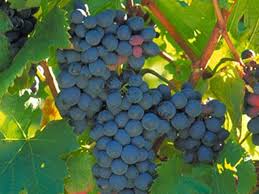
Chenin Blanc is one of the most versatile white wine producing grapes in the world. From dry and austere to sweet and rich, the grape's high acidity makes it a prime candidate for producing a variety of styles. Virtually anywhere grapes grow in the world, you will find Chenin Blanc. While not all are good, many great values can be found. Here are the top ten examples or wine produced from Chenin Blanc.
1. Domaine des Aubuisieres - 'Cuvee de Silex' - 2008
For this first "top ten-er" we take the grape back to its home in the Loire region of France. From sparkling to dessert, the Chenin Blanc grapes is used to make all styles of wine in the Loire. One of my favorite value producers from the region is Domaine des Aubuisieres owned by Bernard Fouquet. Bernard has 55 acres in the Vouvray sub-region of Touraine in the Loire. He plants just one grape...you guessed it, Chenin Blanc. His world-class Chenins have been praised by wine critics across the globe with the Wine Spectator giving the 2008 Cuvee de Silex ($17) an 89-point rating (Very Good) out of 100.
The Cuvee de Silex is a dry style Chenin, showing stone fruit like peaches and tree fruit like pears with a refreshing minerality. The wine has depth, complexity and structure as a result of the soil and conditions (terroir) of the land where the grapes grow. Fouquet's Cuvee de Silex comes from vineyards made up of clay and silex (flint). The soil imparts a distinct flintyness (minerality) similar to Sauvignon Blanc produced in the Pouilly Fume and Sancerre sub-regions just east of Vouvray in the Loire. This wine may not cost $100 or be a top 100 wine in the world, but it is an incredible find for $17.
2. Nicholas Joly - 'Coulee de Serrant' - 2007
With this next wine we stay in the Loire, but head west to the Anjou sub-region. Within Anjou lies Savennieres, a white wine producing region that makes less than 30,000 cases a year. The Savennieres sub-region is home to Coulee de Serrant, a 17 acre monopole (winery and land is owned by one person). Coulee de Serrant is owned by biodynamic wine icon Nicholas (also spelled Nicolas) Joly. Joly is a pioneer in the eco-friendly biodynamic winemaking practice, producing distinctive, world-class wines from the Chenin Blanc grape.
The 2007 Coulee de Serrant received 92 points (outstanding) from the Wine Spectator. Year after year Joly gets international attention for his concentrated Chenins that display nerve and longevity. The 2007 showed beautifully with characteristics of peach, apricot and quince. The Savennieres sub-region produces wines high, high, high in acidity that are often described as austere in their youth. Because of this the Chenins from Savennieres can age for the better part of a decade, pretty remarkable for a dry white.
3. Domaine des Baumard - 'Carte Turquoise' - NV
With this next Chenin we're in the Loire one more time to showcase the remarkable versatility of this grape. The Domaine des Baumard Cremant de Loire is a sparkling wine made using Chenin Blanc with a dash of Cabernet Franc and Chardonnay blended in. Domaine des Baumard's Carte Turquoise, like the Coulee de Serrant, comes from the Anjou sub-region within the Loire. Just south of Coulee de Serrant in Anjou is another sub-region called Coteaux du Layon, where Baumard's vineyards lie.
Cremant de Loire is made using the traditional method - the same process used to make the sparkling wines from the infamous Champagne region of France. With the traditional method, the second fermentation is performed in the bottle, and the wine is left to rest with its sediment, a process known as sur lie in France. The end result is a wine that smells of fresh bread dough or biscuits. The Carte de Turquoise by Baumard is a style known as Brut (one of the driest). This wine displays the typical biscuity aroma followed by citrus fruit like limes and tree fruit like apples. This one's a great value-packed alternative to Champagne coming in at just under $20.
4. Mulderbosch - Chenin Blanc - 2007
For this next wine, we say goodbye to France and hello to South Africa. For years in South Africa Chenin Blanc went by the name Steen. However today most producers just use the Chenin name. Like in France, South African's use the grape to make a wide variety of styles, with many wineries having two or three in their portfolio. Mulderbosch is regarded as one of the highest quality wine producers in the area, and most of their wines retailing for under $20.
Stellenbosch is the highest quality wine producing region in the country, making wines from a variety of grapes. Stellenbosch's success can be linked to both its growing conditions and Stellenbosch University, which offers an accredited degree in oenology. The university is an incredible resource for winemakers and producers, and was the driving force behind the wine laws governing the country. The Mulderbosch Chenin Blanc from Stellenbosch is a still white wine showing flavors and aromas of green apple and quince with refreshing acidity. Mulderbosch frequently does well in trade mags, and the 2007 Chenin Blanc scored an 89 in Wine Spectator. A great find for $14.
5. Cave Extreme - South Extreme - NV
For years many South African wine producers used Chenin Blanc to make their sparkling wines. Today most producers use a combination of Pinot Noir and Chardonnay for their bubblies (called Cap Classique). So to experience quality Chenin sparkling wines we must leave South Africa and head to South America, specifically Argentina. Chenin Blanc is used in the production of many Argentinian sparkling wines, and for under $10 there are few better than the South Extreme by Cave Extreme.
Argentina has been perfecting international grape varieties as of late. From France's Malbec to Italy's Bondarda, there's no shortage of cool wine being produced in Argentina, and many from lesser-known grape varieties. This wine is one of three sparkling wines Cave Extreme makes, the others consisting of Pinot Noir and Chardonnay. This wine is very refreshing showing beautifully with round, soft characteristics of tree fruit like pear and green apple. For only $9, this non-vintage extra brut (dry) bubbly is a real treat.
6. Pacific Rim - Chenin Blanc - 2007
Sticking with the new world wine producing countries theme, we head north to Washington state. Washington has been producing some amazing wine from grapes like Riesling, Cabernet Sauvignon, and Syrah in the last decade. Chenin Blanc, however, has caught the attention of one wacky winemaker, Randall Grahm. Grahm started his illustrious career by opening Bonny Doon winery in central California. Known for his oddities and uniqueness, he has brought attention to grapes like Albarino and Chenin Blanc in the states.
Grahm's new adventure has been the Pacific Rim wine project located in Washington. With a heavy emphasis on Riesling, the winery also produces wines from Gewurztraminer, Sangiovese, Barbera, and of course Chenin Blanc. The Pacific Rim NV Chenin received high accolades from the press including an 88-point rating from the Wine Spectator. This rating secured the Pacific Rim winery a spot in the magazine's Best Value wines. Today the winery produces a vintage version that shows flavors and aromas of grapefruit, green apple and lush peaches. The winery preserves the grapes natural acidity by fermenting and aging in stainless steel and making sure the wine doesn't undergo Malolactic Fermentation (MLF). For $10 this screw topped, off dry Chenin is a steal.
7. Pine Ridge - Chenin Blanc/Viognier - 2008
Number 7 on this top ten list is Pine Ridge's Chenin/Viognier. Before you start thinking, "That's not Chenin" know that this wine is made from 80% Chenin Blanc. In the US a wine only needs to be made up of 75% of the grape stated on the bottle. Viognier is added to the label mainly for marketing purposes. This wine has always had a soft spot in my heart. High-acid Chenin compliments lush Viognier wonderfully.
This odd blend was was a product of experimentation. It was "discovered" in the early 1990's by Pine Ridge, and has become a staple in their portfolio. The main grape, Chenin Blanc, comes from the Clarksburg appellation in California. Year after year this wine has earned numerous accolades from Robert Parker of the Wine Advocate, who put the 2008 in his top 50 Super Domestic Value Wines. The wine displays green apple and pear, with a distinct honeydew melon compliments of Viognier. The wine has just a kiss of sweetness making it a perfect pairing to spicy seafood dishes. At $14, its a real find.
8. Paumanok - 'Dry' Chenin Blanc - 2009
In the past 5 years, New York wines have exploded. While they are sometimes hard to find, they are often crowd pleasers. The growing conditions in New York are ideal for grapes like Riesling and Gewurztraminer, but look out America, Chenin Blanc from the area is killer. Paumanok only makes about 500 cases of their North Fork of Long Island Chenin, so availability is tough. The wine recently received an 88-point rating from Wine Spectator, making it even more difficult to find.
This family-owned and operated winery produces less than 9,000 cases of wine each year. The vineyards are all estate-owned and operated, so production methods are monitored by the owners from bud break to bottling. This "dry" Chenin displays aromas and flavors of pineapple and melon with a nice racy acidity. Its light touch of sweetness is the wonderful cherry on top. This wine is a little more than some of the other domestic Chenins highlighted, but for $28 it's well worth it if you can find it.
9. Rudera - 'Noble Late Harvest' Chenin Blanc - 2005
For number 9, we head back to South Africa. We have showcased the grape as sparkling, still, blended, dry, and off-dry. But here we go all the way to sweet, even dessert-like. The grapes used in the production of this wine are sweet. They become sweet because they are affected by botrytis cinerea, aka the noble rot. This is the same fungus that grows on Semillion and Sauvignon Blanc in the famous Sauternes region of France. The fungus attacks the grapes and concentrates the sugars, making them ultra-sweet. This fungus does not occur everywhere or every year, which is why the Rudera Noble Late Harvest Chenin is made only in exceptional years - years where the sun can meet moisture at the perfect time to create the perfect type of mold.
Rudera is moderately expensive ($30 for a half bottle). It's made in very limited quantities (under 200 cases). And it's most commonly sold at auctions. This rich, sweet Chenin displays lush apricot and honey, a great pairing for dessert and rich foods like Foie Gras. If you find a bottle...BUY IT! Like the others, this wine has received its fair share of international attention, including a rating of 91 points by Stephen Tanzer's International Wine Cellar for their 2005 vintage.
10. Domaine du Petit Metris - Quarts de Chaume - 2007
For last wine on the top ten list we go back to where it all began, the Loire in France. This particular Chenin Blanc showcases the variety of styles produced not just in France, but around the world. Quarts de Chaume, a sub region inside the greater Anjou region, sits inside the Coteaux du Layon sub-region just like Baumard's vineyard south of Coulee de Serrant. Wines from Quarts de Chaume are world-class, and the best from the region are made using botrytis-infected grapes, just like the Rudera.
Domaine du Petit Metris earned a 94-point rating from the Wine Spectator for their 2007 vintage, and you have to pay for it. A 500ml bottle of this wine, if you can find it, goes for about $60. Only 75 cases were imported into the US, most of it picked up by wine wholesalers, retailers and restaurateurs to share with their friends. This rich, sweet, succulent wine displays layers of creme, honey, marmalade, peach, pears, apricots, and so on, and so on, and so on. While not as accessible as some of the others, it's certainly a fantastic example of Chenin Blanc made sweet.
Well, there you have it, a list of the top ten examples of Chenin Blanc's versatility. I hope you got a feel for how diverse the grape truly is. With styles ranging from sweet to dry and still to sparkling the grape has become a bit of a traveler making its way to almost any place that grows grapes. While there are thousands I didn't mention, I wanted to highlight some of the cooler stuff out there, both accessible and...well...not. If you haven't had a Chenin lately, pick one up. They can be incredibly food-friendly, and often a great value find.
If there is a winery or style I missed or one you really like, please feel free to email me, send me a message on facebook, or leave a comment here on the blog. Also make sure to check out Cru Wine Online's hot new website for the latest in food and wine pairing.
Until next time, thanks for reading.
Nicholas Barth
Certified Sommelier
Wine Director